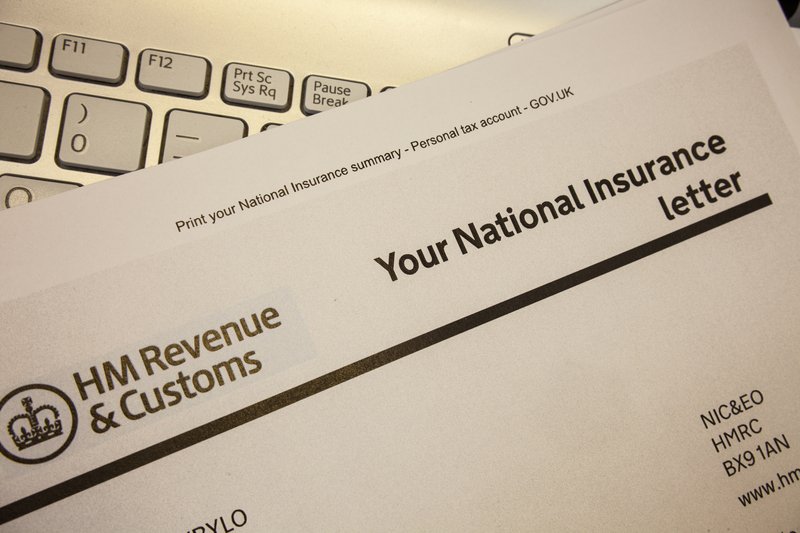
National Insurance is a deduction from earnings, set up originally to fund various State benefits such as the NHS, the State pension and other welfare-related schemes.
In reality, it is just another tax. In fact, as standard income tax rates have remained constant for many years, NI rates have soared.
In this article we look at how NI works, and what your National Insurance Contributions (NICs) will be as a small business person.
Continue…
Small businesses, and the individuals who run them, are subject to a wide array of taxes – from Corporation Tax to National Insurance. This is an overview of the main taxes you will encounter as a small business owner, together with links to our more in-depth guides.
Continue…
If you are a limited company shareholder, you may have to pay personal tax on any dividend income you receive. This article outlines how company dividends are taxed.
Continue…
As the tax year draws to an end, self employed people and limited company owners should consider their tax saving strategies, to ensure that they do not have to pay the highest rate of tax on their hard-earned income.
Continue…
Just as you have to pay council tax on your home, so your business must cough up business rates for its premises. They can be a pain and an overlooked cost when you first start looking into premises. In some circumstatnces, you may even have to pay business rates if you run a business from home.
Continue…
Here (in no particular order) are some handy tips from the Bytestart team, based on our findings working with small businesses over the past decade, and our own personal experience.
Continue…
The end of the 2011-12 tax year is fast approaching – 5 April 2012. In this article, we look at some of the issues that you may like to consider while there is still time to act.
Continue…
HMRC has announced that it is to an impose a Capital Gains Tax ceiling on the amount of capital that can be distributed to shareholders when a limited company is wound up, before income tax is applied.
Continue…
If you are organising a well-deserved works party this Christmas HFM Accountants have summarised the current tax reliefs available: Continue…
Form-filling and filing is an everyday part of running a small business, and unsurprisingly a large part of the time spent dealing with company administration involves filling in (or signing) a whole raft of HMRC forms.
With this in mind, here is our summary of some of the key documents companies will get to know after setting up a new business. In all likelihood, your accountant should deal with most of these forms on your behalf.
Continue…
A new, tough, HMRC penalty regime came into play from 1st April 2009. Individuals and business owners can now face penalties of up to 100% for deliberately underpaying tax.The new HMRC penalty system has been drawn up to encourage people to take more care when submitting tax returns and other documents, as well as to deter deliberate under-assessment of tax liabilities.
Continue…
Bonus payments may have been a bit thin on the ground this year. Hard pressed businesses, struggling to meet existing commitments, may balk at the prospect of parting with cash. However, the benefits of having a loyal and satisfied staff may prompt them to consider alternatives to the cash bonus.
Continue…
When you buy certain new equipment, invest in buildings or research and development, you can deduct a proportion of the cost from your taxable profits and reduce your business tax bill, via the Capital Allowances scheme.
Continue…
If you are an incorporated business, you must pay Corporation Tax on any annual profits generated by the business each year.
Continue…
Following the creation of a new flat 18% CGT rate during Budget 2008, the Chancellor announced the introduction of entrepreneurs’ relief which was to compensate business owners who would have paid a lower rate under the previous taper relief rules on business disposals.
The relief allowed business owners to pay an effective 10% capital gains tax rate on business disposals up to a lifetime ‘allowance’ of £1m. In the first 2010 Budget, Alistair Darling raised the lifetime limit to £2m. This was further extended to £5m in the ‘Emergency Budget’ of 2010, effective from 23rd June 2010, and further increased to £10m in the Budget of 2011, effective from April 6, 2011.
Continue…
Businesses can currently write off 100% of the cost of acquiring qualifying assets against their taxable profits, up to an annual limit of £100,000. Assets that can be written off in this way include commercial vehicles, plant, computers and other equipment – cars do not qualify.
George Osborne’s Emergency Budget of 22nd June 2010 gave notice that the Annual Investment Allowance (AIA) annual limit is to be significantly reduced from £100,000 to £25,000 from April 2012.
Continue…
In this guide, we look at how sole traders are taxed, and things to consider before taking the plunge.
Continue…
When you set up a limited company, one of the first things you need to do is register to pay Corporation Tax. In this guide, we look at how the registration process works.
Continue…
In this article, we look at what the PAYE scheme is, and how it applies to the self employed, including limited company directors.
Continue…