

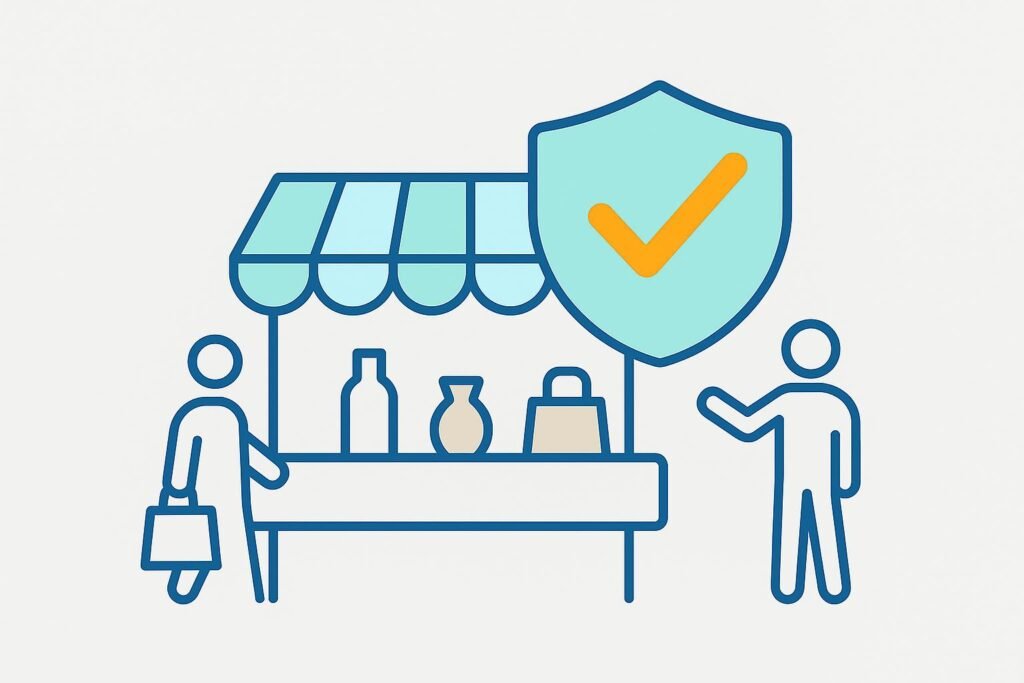
If you’re setting up a stall at a local market, a seasonal fair or even a one-off event, you might be wondering if insurance is something you actually need – or if it’s just another admin headache you can safely ignore.
You’re not alone. Loads of sole traders, side hustlers and hobbyists ask this same question when they’re starting out.
And while it’s not always a legal requirement, public liability insurance is one of those things that, once you’ve looked into it properly, you’ll probably decide is worth sorting out.
Let’s walk through what it is, when you need it, and why most people who sell in person end up buying it, even if it’s just for peace of mind.
So, what does public liability insurance actually cover?
At its core, public liability insurance is designed to protect you if a member of the public is injured or if their property gets damaged because of something related to your business.
In a market stall setting, that might mean:
- Someone tripping over a cable or table leg and breaking their wrist
- A heavy item falling off your display and cracking a child’s foot
- Your stand blowing over and hitting a car
- Hot food causing a burn
- Something leaking onto the floor, causing someone to slip
It doesn’t matter if it was a genuine accident. If someone gets hurt or suffers a loss, they might try to make a claim. And without insurance, that claim lands squarely on you.
Do I legally have to have it?
No – there’s no law saying you must have public liability insurance to sell at a market.
But here’s the rub: most event organisers will insist on it anyway. Many won’t even let you book a pitch without showing them a valid certificate. That applies to everything from farmers’ markets and craft fairs, all the way through to school fundraisers and food festivals.
Even casual one-day events often have insurance requirements baked into their terms and conditions. If they don’t, it’s usually because they’re assuming you’ve already got your own cover.
So while it’s not technically the law, it’s often a condition of entry, which amounts to the same thing in practice.
How much cover do I need?
This depends a bit on the event and what you’re selling.
Smaller local markets might be happy with £1 million in cover. Bigger venues could ask for £2 million or more. If you’re selling anything involving food, tools, sharp objects, or anything a kid could easily grab, you might be nudged toward £5 million just to be safe.
The organiser will usually state the minimum level they expect. If they don’t, it’s worth asking, so that you’re not caught out.
Most insurers will give you options to choose your cover level when you take out a policy.
What if I’m only selling once or twice a year?
That’s a fair question. If you’re doing the occasional Christmas market or summer fete, it can feel a bit much to commit to a full annual policy.
Some insurers now offer short-term or event-specific cover – just a day or a weekend – and it’s often surprisingly affordable. That said, if you’re doing more than a couple of events a year, it usually works out cheaper (and easier) to get a standard 12-month policy.
Plus, having ongoing cover means you’re protected even when you’re between events — for example, during setup, takedown, or if someone later claims that a product you sold caused a problem.
But I’m not really a business…
This comes up a lot. Maybe you’re just selling homemade candles, a bit of artwork, or some jam you’ve made in your kitchen. It’s just a hobby, right?
That may be how it feels, but in the eyes of the law, if you’re selling to the public and accepting money, you’re operating as a business. And that means you’re responsible for what you sell and how you operate.

Qdos self-employed insurance from £4.58/month
Public liability, employers liability and PI cover • Trusted by thousands.
ByteStart partner for 15 years • Rated 4.9/5 (exceptional) on Feefo.
Even if you’re doing it just once a year, the risk doesn’t vanish. One accident, one claim, and you could find yourself in hot water.
Will it cover my stock or table if something gets damaged?
No, not unless you’ve added that as extra cover.
Public liability is all about protecting other people from harm or loss. If you want cover for your own equipment, displays, or stock-in-transit, you’ll need to look for additional protection.
Some policies allow you to add this during setup. Others bundle it into something like “market trader insurance” or “stallholder cover”.
Where can I get it, and what is the cost?
You can get public liability insurance from most small business insurers, and it’s usually not expensive, especially if you’re just after basic cover for a single-person business.
🛡️ Qdos offers public liability from just £4.58/month, with flexible cover options and fast online quotes. You can sort it in under 5 minutes. Get a quote here.
Things to look out for:
- Do they provide instant documents you can send to the event organiser?
- Can you add cover for helpers if someone’s giving you a hand?
- What’s the excess (the amount you pay if you make a claim)?
- Can you cancel if you decide not to trade again?
The bottom line
You don’t have to buy public liability insurance to sell at a market or fair. But if you skip it, you may not be allowed to trade, and you’re leaving yourself exposed if something goes wrong.
It’s not just for full-time traders or big businesses. It’s for anyone who sells face-to-face, even if you only do it once or twice a year. And for the sake of a few quid a month, it’s usually worth it.