

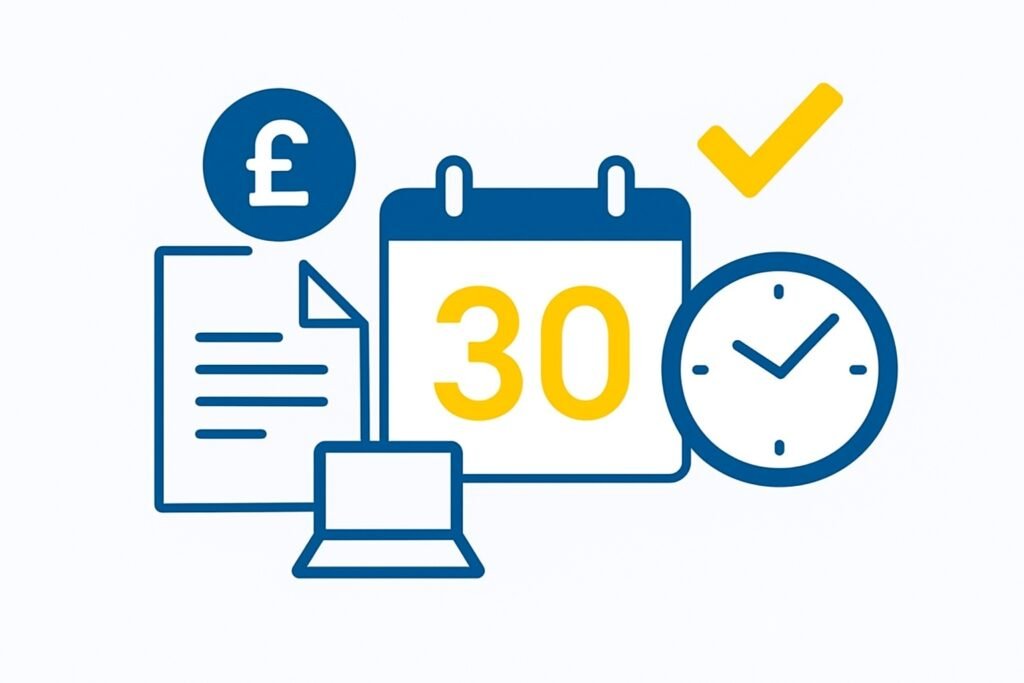
If you’re new to self-employment, setting clear payment terms is one of the most important things you can do to protect your cash flow.
But what are the standard terms in the UK? How do they work in practice? And what happens when a big client simply decides to ignore them?
What are payment terms?
Your payment terms set out when you expect to be paid after delivering your work or sending an invoice.
They’re usually expressed as a fixed number of days, like “7 days” or “30 days”, and should be clearly stated on your invoices and client agreements.
For example:
- Payment terms: 14 days from the date of invoice
- Due date: 30 September 2025
Some accounting software will let you set default payment terms, so your invoices are automatically dated correctly. For help with layout, see our sole trader invoice templates.
What’s considered standard in the UK?
There’s no single rule, but these are the most common terms used by sole traders:
- 7 days – often used for trades, design, or consultancy work
- 14 days – a common compromise for small clients
- 30 days – standard for corporate clients and agencies
Longer terms do exist, but they can be risky. Once you start waiting 60 or 90 days, you’re effectively acting as a free lender to your client.
The legal minimum: 30 days for business-to-business
If you’re working with other businesses and don’t agree on payment terms in writing, the law sets a default term of 30 calendar days from the date of invoice or delivery, whichever is later.
This rule is part of the UK’s late payment legislation, which also gives you the right to charge interest and debt recovery costs. You can read the full rules on GOV.UK, or see our guide to chasing unpaid invoices.
Big clients don’t always play fair
In theory, you can agree on whatever payment terms you want. In practice, many large businesses impose their own.
It’s not unusual to be told “our terms are 60 days end-of-month” after the work is complete.
Unfortunately, many sole traders feel unable to push back, especially if it’s a household name or an agency that controls access to regular work.
In 2026, the UK government is launching a crackdown on persistent late payers.
The reforms will include stricter reporting rules for large companies and may offer stronger protection for small suppliers. You can read more in our article on the 2026 late payment crackdown.

95% off Xero Accounting Software for 6 months
Fully compatible with Making Tax Digital (MTD) for sole traders from April 2026.
How to set your own terms (and stick to them)
If you’re dealing with other small businesses or individuals, you can usually agree your own terms at the outset. Here are some tips:
- Include clear payment terms on every invoice
- Set expectations before work begins (in writing)
- Add your due date, not just the number of days
- Use software that tracks due dates and sends reminders
Even if you’re forced to accept longer terms from a big client, you can still maintain shorter terms for everyone else.
Should I offer early payment discounts?
Some freelancers and sole traders offer a small discount, typically 1–2%, to encourage early payment. This can be a useful option if you need cash quickly, but it’s best used sparingly. Avoid building in discounts that reduce your earnings unless it’s part of a broader negotiation.
Final thoughts
Sole traders rely on prompt payment to survive. While you may not always be able to dictate the terms, especially when working with larger firms, you should always:
- Set clear expectations
- Keep a record of agreements
- Follow up quickly if a payment is overdue
For help writing and formatting invoices, see our free sole trader invoice templates. If you’re already chasing a late payment, our guide to dealing with unpaid invoices explains the steps you can take.
Sole Trader Accounts
From £50/month

Sole Trader Accounts
From £49/month