
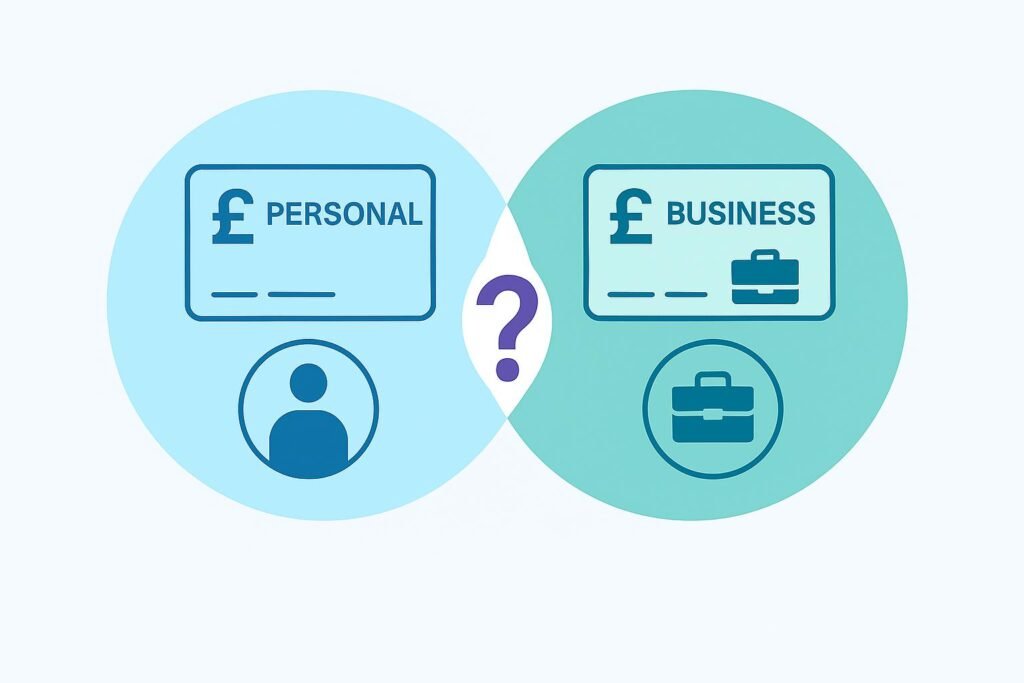
One of the most frequently asked questions by would-be business owners is: do you need to open a separate bank account for your new business?
The right answer depends on which business structure you’ve chosen, i.e., whether you’re trading as a sole trader, via a limited company, working in a partnership, or using an umbrella company.
In this guide, we look at whether you’re legally obliged to have a business account, why it might be worth opening one anyway, and how the rules differ depending on the business structure you’re trading under.
Most self-employed people do not legally need a business bank account. However, the position varies depending on whether you’re a sole trader, partnership, limited company or umbrella worker. In some cases a separate account is optional, while in others it’s effectively mandatory.
| Business Structure | Legally Required? | Notes |
|---|---|---|
| Sole trader | ❌ No | You and your business are the same legal entity. You can use a personal account, but separate accounts are recommended to simplify bookkeeping and tax calculations. |
| Partnership | ❌ No (but strongly advised) | Not legally required, but a joint business account improves transparency and helps avoid disputes between partners. |
| Limited company | ✅ Yes | A limited company is a separate legal entity. All income and expenses must go through a separate company bank account. |
| Umbrella company worker | ❌ No | You are treated as an employee. The umbrella company handles invoicing and tax, so you don’t need a business account. |
Sole trader
Legally Required? ❌ No
Position: You and your business are the same legal entity. A separate account is a sensible move but not mandatory.
Partnership
Legally Required? ❌ No (strongly advised)
Position: A joint business account will help prevent disputes between partners and keeps business transactions separate.
Limited company
Legally Required? ✅ Yes
Position: A separate legal entity must have its own bank account.
Umbrella company worker
Legally Required? ❌ No
Position: You are an employee and only need a personal bank account.
Do you need a separate business bank account if you’re self-employed?
If you’re working as a sole trader, there’s no legal obligation to open a business bank account.
You and your business are treated as a single legal entity, so you can use your personal current account to receive income and make any purchases for your business.
However, using your personal account may be legal, but it isn’t ideal.
Most sole traders find that separating their business and personal finances from the start helps avoid problems later.
Some benefits of having a separate account
- Easier bookkeeping: you can track business income and expenses without mixing them with personal costs.
- Simpler tax returns: keeping your business transactions in one place makes completing and submitting your annual Self Assessment much less stressful.
- Compatible with software: most online accounting tools (like Xero (80% off for 6 months) or QuickBooks) connect directly to business accounts via Open Banking.
- Project a professional image – clients and suppliers will take you more seriously if they’re making payments to a business account.
- Reduces potential problems with your bank – many personal account terms prohibit business use (check the Ts and Cs), and your bank may flag or freeze transactions if you overuse them for business purposes.
You can open a basic business account for free – or at a very low cost. Some challenger banks even offer perks like cashback and free invoicing tools.
For more tips, see: How to choose the best sole trader bank account
What about if you’re a partnership?
If you’re starting a partnership, you’re not legally required to open a business account; however, it’s strongly recommended.
With more than just one person running the business, a shared account makes it easier to:
- Track income and costs – when multiple people are involved.
- Share financial access – no need to rely on one person.
- Avoid potential disputes – over which partner made transactions.
Most banks ask partnerships to open a joint business account and may request identification from all partners, as well as a signed partnership agreement.
Read more here: Joint business bank accounts for partnerships
Do limited companies need a business bank account?
Yes – if you set up a limited company, you must open a separate business bank account in the company’s name.
This is because your company is a separate legal entity.
All income and expenses must be processed through the business account, not your personal account.
If you mix a director’s and the company’s finances, this can lead to accounting and tax errors, and possible breaches of the Companies Act – even if you’re the sole director and shareholder.
Do umbrella company workers need a business account?
If you work through an umbrella company, you’re classed as an employee. The umbrella company receives payment from your agency or client, deducts applicable taxes and other costs, and pays you a net salary.
You don’t invoice clients or handle business income yourself, so a personal bank account is all you need.
Why open a business bank account even if you don’t need to?
Even if it’s not required by law, a separate business account can help you:
- Stay organised – see what’s business-related at a glance
- Get paid faster – many business accounts let you send professional invoices
- Prepare for growth – lenders and grant providers often ask for business statements
- Simplify audits or investigations – reduces the risk of confusion if HMRC reviews your tax return
- Build your business credit score – useful if you apply for finance later on. If your personal history is already damaged, see which business accounts may accept sole traders with bad credit
It also helps you set boundaries between “you” and “your business” – something many sole traders find useful psychologically.
Just check your bank’s terms first. Some personal accounts don’t allow business use, and using them this way could trigger reviews or restrictions.
What to look for in a business bank account
There’s more choice than ever – and not all business accounts come with fees. You can now choose between:
- Free business accounts – especially for sole traders or side hustles
- Digital-first banks – like Tide, ANNA Money, Starling or Zempler, with mobile tools and fast setup
- Traditional banks – like Barclays, NatWest or HSBC, with in-branch support
- Accounts with rewards – some providers offer cashback, discounts or software perks