
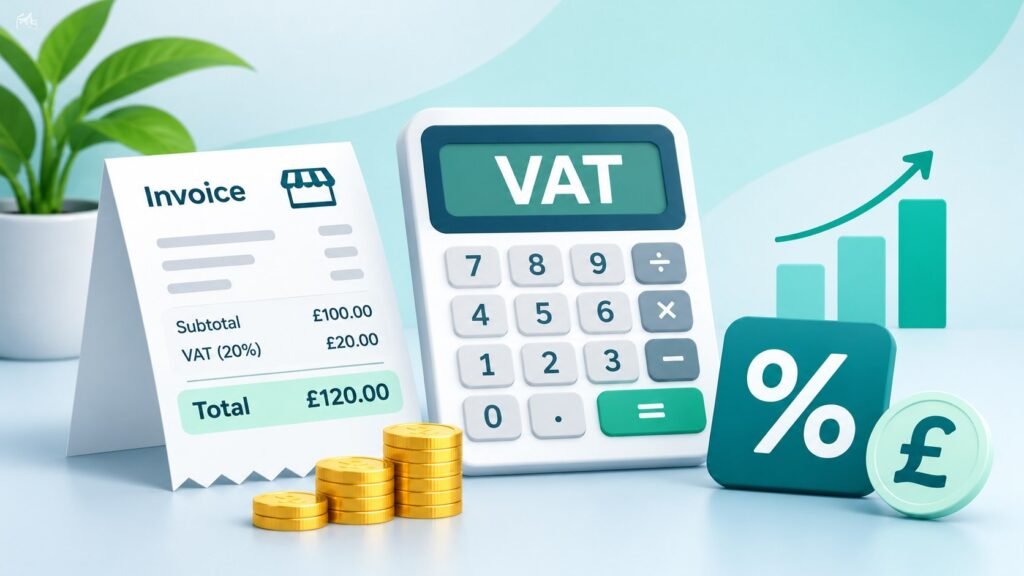
Use our VAT Calculator to add VAT to a price or work backwards from a VAT-inclusive total. Enter an amount, choose the VAT rate and see the net price, VAT amount and total. It works for sole traders, limited companies and anyone checking a UK VAT calculation.
VAT Calculator
Add or remove VAT from any amount.
Figures are rounded to the nearest penny. Adding VAT and then removing it will not always return exactly the same amount, particularly with very small prices. Invoice software may also round VAT per line or on the invoice total, producing small differences.
How to add VAT to a price
If you’re charging £100 for a standard-rated service, add 20% VAT (£20) and the customer pays £120. Select ‘Add VAT to a price’ in the calculator and enter the amount before VAT. For goods or services on the reduced rate, choose 5% instead.
How to remove VAT from a total
Sometimes you have a VAT-inclusive price and need to know how much of it is VAT. For example, £120 including 20% VAT consists of £100 before VAT and £20 VAT. You can’t simply take 20% off £120: that would give the wrong answer. Choose ‘Remove VAT from a total’ and the calculator will split the figure correctly.
Which VAT rate should you use?
The standard UK VAT rate is 20% and applies to most goods and services. A reduced rate of 5% applies to some supplies, while others are zero-rated. You need to select the rate that applies to your particular sale – the calculator cannot determine this for you. Zero-rated supplies are still taxable for VAT purposes, which is different from being VAT-exempt. See HMRC’s VAT rates guidance if you’re unsure which rate applies.
Our VAT guide for the self-employed explains when to charge VAT, how VAT returns work and what you can normally reclaim on business purchases. For businesses using the Flat Rate VAT Scheme, the amount payable to HMRC is worked out differently – this calculator only adds or removes VAT from individual amounts.
Do you need to register for VAT?
Being able to calculate VAT doesn’t mean your business has to charge it. Most businesses must register when their VAT-taxable turnover exceeds £90,000 in a rolling 12-month period, although voluntary registration is possible. Our VAT registration guide covers the rules and deadlines. If your sales are getting close to the threshold, read our article on how the VAT registration threshold affects small businesses.
For more complicated situations, such as mixed VAT rates, exempt income, overseas sales or VAT margin schemes, check the relevant HMRC guidance or speak to your accountant. This calculator isn’t a VAT return or a substitute for checking the VAT treatment of a particular sale.