
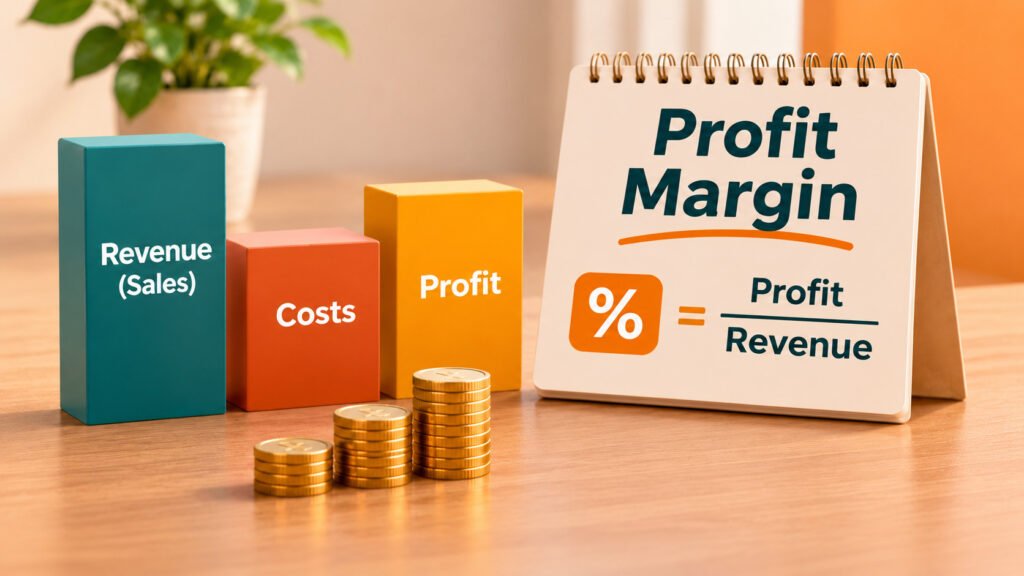
Use our Profit Margin Calculator to work out your business’s gross profit, net profit and profit margins. Simply enter your turnover and business costs to see how much profit you’re making. The calculator is suitable for all types of UK businesses, including sole traders and limited companies.
Profit Margin Calculator
Work out how much of your turnover is left after business costs.
Your profit breakdown
Net profit here means profit before tax, based on the costs you’ve entered. Figures exclude VAT. Gross margin is gross profit divided by turnover; net margin is net profit divided by turnover.
What is a profit margin?
Profit margin is the percentage of your sales you make as profit. A business can bring in plenty of money and still have very little left once its bills are paid. That’s why looking at profit alongside turnover gives you a better idea of how you’re doing.
Say you make £100,000 in sales during the year and spend £60,000 on the goods or services you sell. That’s £40,000 gross profit, or a 40% gross margin. Take off another £20,000 for rent, insurance, software and other running costs, and you’re left with £20,000 profit before tax – a net margin of 20%.
Gross profit vs net profit
Gross profit is what’s left after paying the direct costs of making a sale. For a shop, that will usually mean the cost of stock. For a tradesperson, it might be materials and subcontractors. It’s calculated before you deduct general overheads.
Net profit before tax is what remains once you’ve deducted your other running costs as well. This includes things like rent, business insurance, advertising and accountancy fees. If you’re unsure what to count, our guide to sole trader accounts explains the basics of recording income and expenses.
How to use the calculator
You can use monthly or annual figures – just make sure they cover the same period. Enter your turnover first, followed by the costs directly associated with sales and your other expenses. If a cost doesn’t apply to your business, leave that box blank.
If you run a consultancy or another service business, you may have little or nothing to put under cost of sales. Most of your spending might instead go in the other expenses box. The important thing is not to enter the same cost twice. If you keep your figures in a spreadsheet or accounts package, our comparison of accounting software and spreadsheets may be useful.
What do the results tell you?
If your net margin is 15%, you’re making £15 profit before tax from every £100 of sales. A negative figure means you’ve spent more than you’ve earned over the period. To work out how many sales you need before you start making a profit, try our Break-Even Calculator.
There’s no single profit margin that every business should aim for. A retailer with stock and premises will have very different costs from a freelance consultant. Comparing your figures with previous months or years can be more revealing than chasing an industry average. If you’re looking at your business’s longer-term value, see our guide to valuing a small business.
This calculator uses the figures you enter and doesn’t calculate your tax bill. Check the results against your bookkeeping records before making financial decisions.