
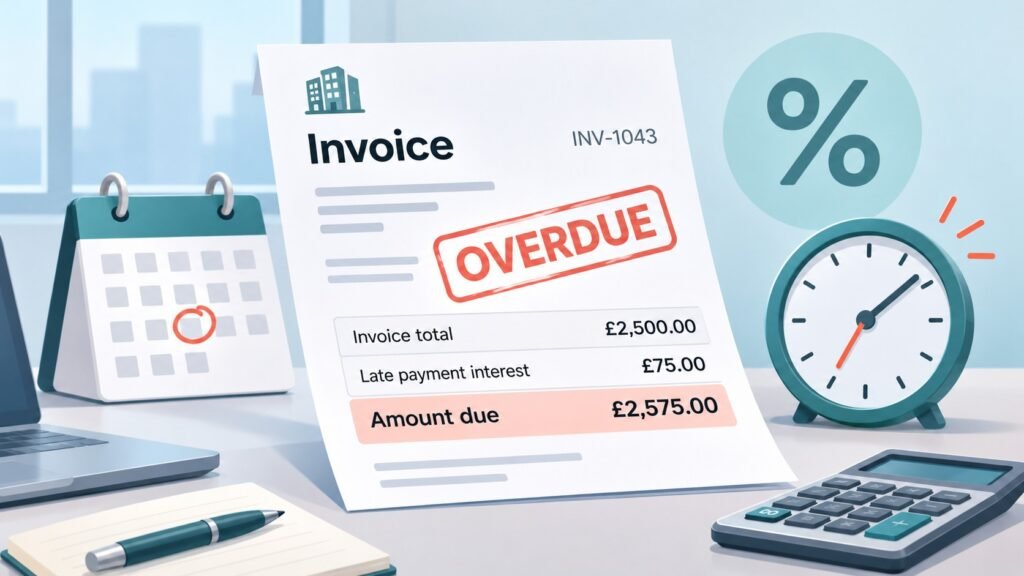
Got a business invoice that’s overdue? Enter the amount, when it was due and when it was paid (or the date you’re checking it). This calculator estimates statutory late-payment interest and the fixed recovery compensation you may be able to claim.
Late Payment Interest Calculator
For overdue UK business-to-business invoices
Simple interest based on the applicable half-yearly reference rate, plus 8 percentage points. An estimate only.
How much interest can you charge on a late invoice?
For qualifying business-to-business debts, statutory late-payment interest is 8 percentage points above the Bank of England reference rate. It’s simple interest, not compound interest. For example, when the applicable reference rate is 3.75%, statutory interest is charged at 11.75% a year. The rate is fixed when the debt first becomes late, rather than changing each time the Bank of England moves its Bank Rate. Read GOV.UK’s late-payment interest guidance for the rules.
Which Bank of England rate should you use?
Use the Bank Rate from the most recent 30 June or 31 December before interest started running. If an invoice first became overdue on 10 October 2026, for instance, you would use the rate on 30 June 2026, which was 3.75%. That remains the reference rate for the whole overdue period even if Bank Rate subsequently changes. You can check older dates against the Bank of England’s historical rates.
Can you add debt recovery costs?
For eligible unpaid commercial debts, you can generally claim a fixed sum on top of statutory interest: £40 when the debt is under £1,000, £70 from £1,000 to £9,999.99, and £100 from £10,000 upwards. The calculator has an option to include this sum. The figures are per qualifying debt, not an amount you automatically add to every invoice. See GOV.UK’s recovery cost rules.
When does an invoice become overdue?
Interest usually starts the day after the agreed payment due date. If you never agreed a due date, separate statutory rules determine when payment becomes late, normally involving 30 days after the invoice is received or the goods or services are supplied. Check your payment terms rather than entering the invoice issue date as the due date. Our guide to invoicing as a sole trader explains what to put on an invoice. If a customer still hasn’t paid, see what to do when a client doesn’t pay.
Before you add interest to a bill
This calculator is for one qualifying UK commercial invoice paid late or still unpaid. It assumes the amount has remained outstanding throughout the period and uses a 365-day year, even across a leap year. It doesn’t deal with part-payments, disputed invoices, consumer debts, contracts with a different qualifying interest remedy, older contracts with different rules, or additional recovery costs. The figure is an estimate, not a legal determination of what you’re entitled to claim.
If you’re planning to claim interest, check the contract and relevant payment dates first. The Small Business Commissioner’s interest calculator is another useful reference, particularly if the debt involves a dispute or unusual payment terms.