

Creating and selling your own products and services, building a network of satisfied customers, and managing your own time are just three of the perks of running your own business.
But all too often, I meet entrepreneurs who are burnt out, stressed, and earning insufficient income. This is often because they did not trial their business ideas before they got stuck in.
So today, I want to convince you that you should ‘pilot’ your business idea before you launch your new venture for real.
What is a pilot?
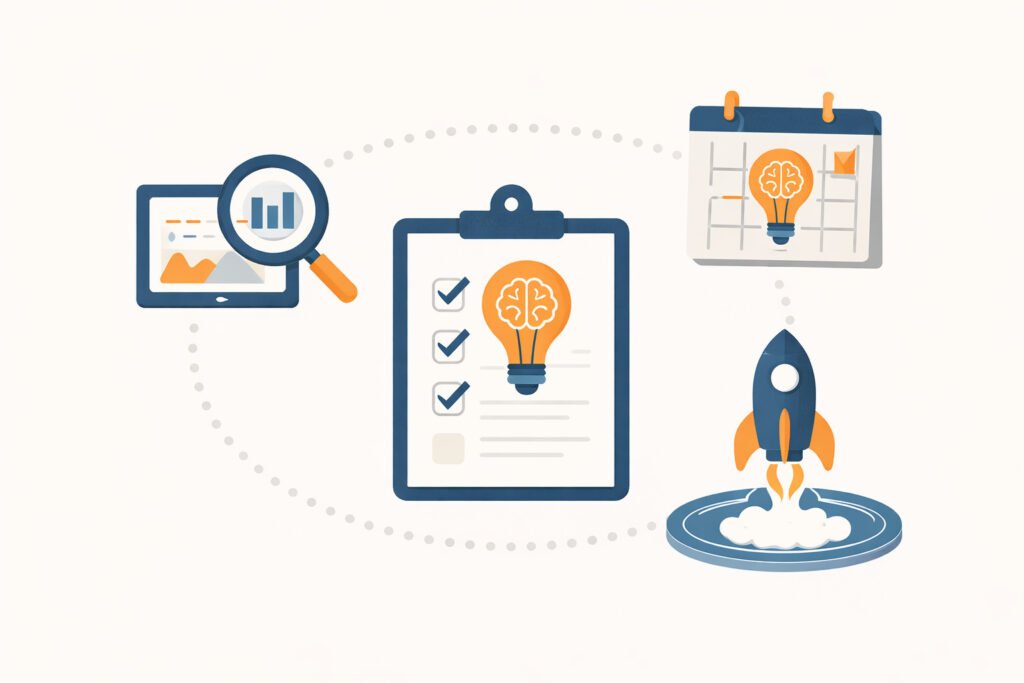
A pilot is a small, simple, controlled experiment. It is the term for trialling something for the first time – a new process, a practice run, a test.
Think of it as your chance to jump into a flight simulator before you try to fly a jumbo jet, a dress rehearsal for a big new play, or the small-scale model of a building you might be thinking of creating.
In the land of the small business or the sole trader, a pilot is a small, relatively inexpensive way to test your business idea, product or service on a market before you invest heavily in it.
3 Big Benefits of Piloting Your Business Idea
Piloting your start-up gives you three big advantages;
1. It puts your product or service to the test
Firstly, and crucially, a pilot helps you determine whether your product or service works and helps you address any unexpected impacts. Sometimes it is only by test-driving your new idea that you can expose both its strengths and weaknesses.
2. It helps you discover whether there is a market
Piloting your startup helps you determine whether there is a market for your product or service and where that market lives.
By trying, on a small scale, to sell your mobile crèche service or your hot cross buns, you begin to get a feel for what the scale of the challenge would be if you made this your full time responsibility.
As an entrepreneur, you will constantly need to find new markets, new buyers, and new ways to deliver value.
To do this successfully, you need to know who your market is, what they consider important, and how to persuade them of the value of what you do or offer.
3. It gives you a valuable insight into the challenges you and your new business will face
And thirdly, a pilot is a great low-risk way to test whether going into business is for you.
The constant need to juggle multiple priorities, the absence of a boss to go to for advice or to blame disaster on – starting and running your own business is not for everyone. A small-scale practice gives you a chance to see what is involved.
For example, your pilot might be running a pop-up shop for a day. Just that one day will require preparation in the form of marketing, branding, product selection, visual merchandising, as well as on the day practising customer service, negotiation, finances and logistics.

80% off Xero Accounting Software for 6 months
Fully compatible with Making Tax Digital (MTD) for sole traders from April 2026.
It’s better to discover that it’s not for you after an exhausting day in a pop-up shop than after you’ve signed a long-term, £20k/year lease on business premises.
3 Essentials for Designing a Pilot
When designing your pilot, ensure the trial run answers the following three questions.
1. Does it work?
Product and software designers know that they rarely get things right the first time. The product needs to go through several versions before it is fit for purpose.
The best way to develop a product or service that works for your market is to involve them in the design. Show and tell frequently during the development process so they can help you improve.
Playwrights do this – they call it a ‘scratch’ performance. Web designers do this – they call it a ‘template’ or ‘wireframe’. Producers of new TV programmes will start with a ‘pilot’. I did this when I wrote the first draft of my book.
Putting your idea through this testing process helps you identify design flaws before production. Sometimes you are so close to your product that you cannot see these until they are exposed to the market.
How could you design a process to safely test out how your product works without spending a lot of money on producing prototypes?
2. Does anyone want this?
Is there a market for your product? One of my clients has produced a great, nifty eco-innovation. Only she cannot get any of the retailers to stock it. Why? Because it doesn’t quite sit with current trends and products.
As she has thousands to shift, we are now looking at how to find the individual customer online. You need to test your product with the potential purchaser, not just your mother or your partner, but real life consumer testing.
This way, you can determine whether there is an appetite for it, or whether you need to create it or build a new market.
Innovation takes time to be adopted. You might have the best idea in the world, but if it’s new, it could take a while to take hold.
James Dyson’s 10 years of struggles before eventually finding success with his revolutionary vacuum products is a testament to this.
How could you gauge market appetite for your product? Could you generate pre-orders from just a small sample or a risk-free trial?
3. Do you like being in business?
A small trial – a market stall, a simple website, a trial run of your workshop – will help you determine if you have the stamina, skill-set and disposition to go it alone.
It can also help you to identify where you might need to hire an expert – perhaps in the fields of accounting, marketing, design or administration.
We can’t all be good at everything, but in the early stages of a new business, you need to be good enough to keep on top of the essentials. A practice at filling a public workshop, for example, can help you to discover if you have the tenacity and innovation to sell the workshop as well as the skills to deliver it.
The key message is: be cautious in the early stages. Try something out before you commit wholeheartedly. Start small. Small is beautiful… and safe.
This article was written for ByteStart by Erica Sosna, author of Your Life Plan: How to Set Yourself on the Right Path and Take Charge of Your Life.