

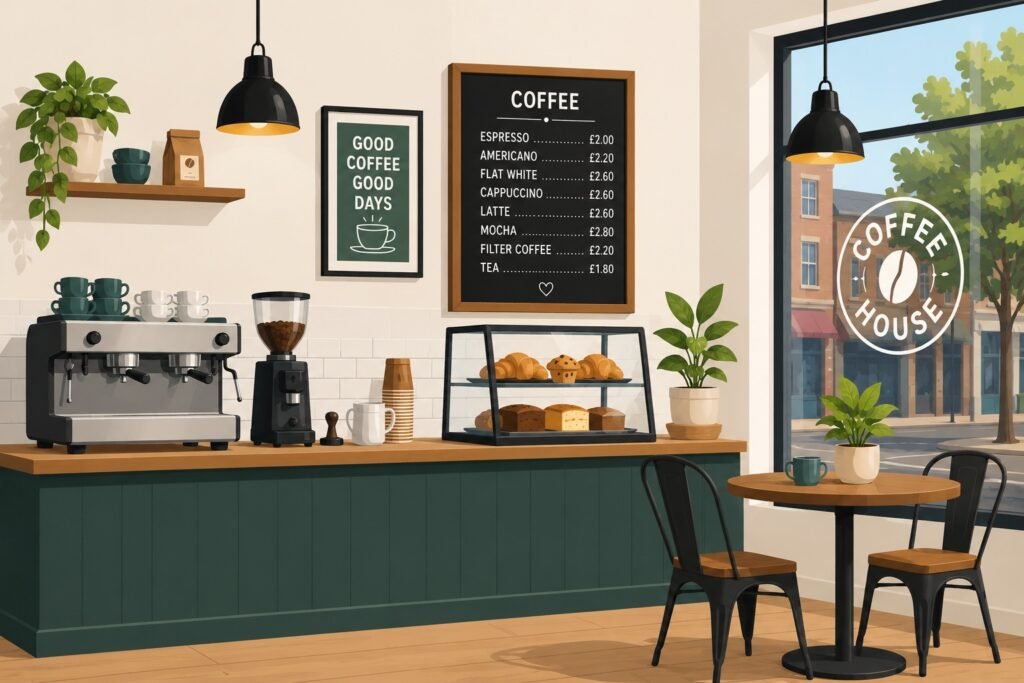
The UK has seen a boom in coffee culture over the past couple of decades, and there’s no shortage of competition from the big high street chains. But small independents which serve great coffee in a friendly setting are still in a good place.
So what exactly does it take to start a coffee shop? Here are the main things you’ll need to sort out before you open the doors.
What do you have to offer?
Start by researching what other coffee shops in your area are offering, including the franchise outlets. This shows you what you’re up against and helps you find a way to differentiate yourself from what everyone else is doing.
Coffee drinkers are becoming more discerning, so how will you tempt them through the door?
Do you have a speciality grade, or do you roast your own beans on-site? Do you want to be known for the ethically-sourced coffee you serve? Is anyone else selling nitro cold brew coffee locally?
Your unique customer offering can include other elements, such as the warm, welcoming service you provide or the pastries and freshly baked cakes you offer. Perhaps the ambience, as well as the coffee, is what will keep people coming back for more.
Reliable supply chain
Another area to research thoroughly is your suppliers. If you’re planning to provide speciality grade coffee, make sure you have suppliers you can rely on to deliver. That goes for everything else, including supplies of milk alternatives which customers now expect to be offered.
Enquire about payment and lines of credit. Forging a good relationship with your main supplier is important, so find out as much as you can before deciding to go ahead.
The right location
Finding the right site at a price you can afford can be pretty time-consuming unless you’re lucky and suitable premises become vacant, or you already know of one.
Ideally, you want a prime location where you won’t go unnoticed and where there are other amenities to attract people.
Don’t just look at the rent. Check business rates, service charges, utilities and any work you’ll need to do before you can open.
Our guide to business rates and Small Business Rate Relief explains how the system works.
Check if you are eligible for any small business awards, grants or incentives by researching online and contacting your local authority.
Register your coffee shop as a food business
Before you start trading, you’ll need to register your food business with your local authority.
You must normally do this at least 28 days before you start trading. Registration is free and can’t be refused.

80% off Xero Accounting Software for 6 months
Fully compatible with Making Tax Digital (MTD) for sole traders from April 2026.
You’ll also need food safety procedures in place. The Food Standards Agency’s allergen guidance explains your responsibilities for providing customers with information about allergens in the food and drink you sell.
This is particularly important if you’re preparing sandwiches, cakes and other food on the premises. Food that’s prepacked for direct sale has specific labelling requirements, including a full ingredients list with allergens emphasised.
Business structure and insurance
Before you open for business, you’ll have to sort out the legal side. This includes choosing a business structure – limited company or sole trader – and registering the business with HMRC for tax purposes as well as VAT if required.
If this is your first business, our 15 steps to becoming self-employed cover the main things you’ll need to sort out.
If you employ staff, you’ll normally need to take out employers’ liability insurance. You should also consider public liability insurance to protect the business if a customer or member of the public is injured or their property is damaged.
Most of this can be arranged online, and there’s plenty of free advice available for small businesses.
Knowledgeable staff and a great atmosphere
You can recruit trained baristas through a recruitment agency or advertise for staff. Either way, you need to employ someone who knows their stuff – customers will expect it.
That said, small independents want to distinguish themselves from the big chains by offering a superior product that is expertly prepared and served in a great setting, but try not to take yourself too seriously.
Think of that McDonald’s ad where baristas patronise customers who ask what a flat white is – don’t be like them! You definitely need to know how to serve a flat white and love what you do, but focus on producing great coffee first and foremost, rather than signalling your expertise.
Spread the word
You’ve got your team and supplies sorted and the coffee shop set up the way you want it. Now all you need are some customers!
Hopefully, you’re in a good location, and customers will start to pop in to see what you have to offer. The coffee is good, the service great. Word will start to get around.
However, to build and sustain a viable business, you require more than that – you need a marketing strategy. This can be something as simple as a sandwich board or A-board on the pavement to let people in the immediate area know you’re there.
Set up a Google Business Profile so people searching for coffee nearby can find you, and use social media to showcase the shop, your coffee, and any special offers. Instagram and Facebook are obvious places to start for a local coffee business.
Remember to contact local media outlets and let them know about your new venture, as it can be a great way to get free publicity.
Make it easy for them by preparing a well-written press release in advance and explaining what makes your coffee shop special!
Building customer loyalty
Once you’ve got some new customers, you want to encourage them to become regulars and bring their friends along!
Providing excellent service and consistently great coffee is crucial, but also consider operating a loyalty scheme that is easy to implement and rewards customers in a tangible way.
For an independent coffee shop, regular customers can be particularly valuable. Someone who buys a coffee several mornings a week is worth far more over the year than somebody who happens to walk through the door once.
Profit and loss
Start as you mean to go on by keeping an up-to-date profit and loss account from day one. This will help you to stay realistic about how you are doing and inform how you manage the business going forward.
Keep a close eye on your margins too. Coffee itself may have a healthy margin, but rent, wages, energy, card fees, ingredients and wastage all have to be paid before you make a profit.
If you’re still at the planning stage, putting together a business plan will help you work out your startup costs, monthly overheads and how much you need to sell each day.