


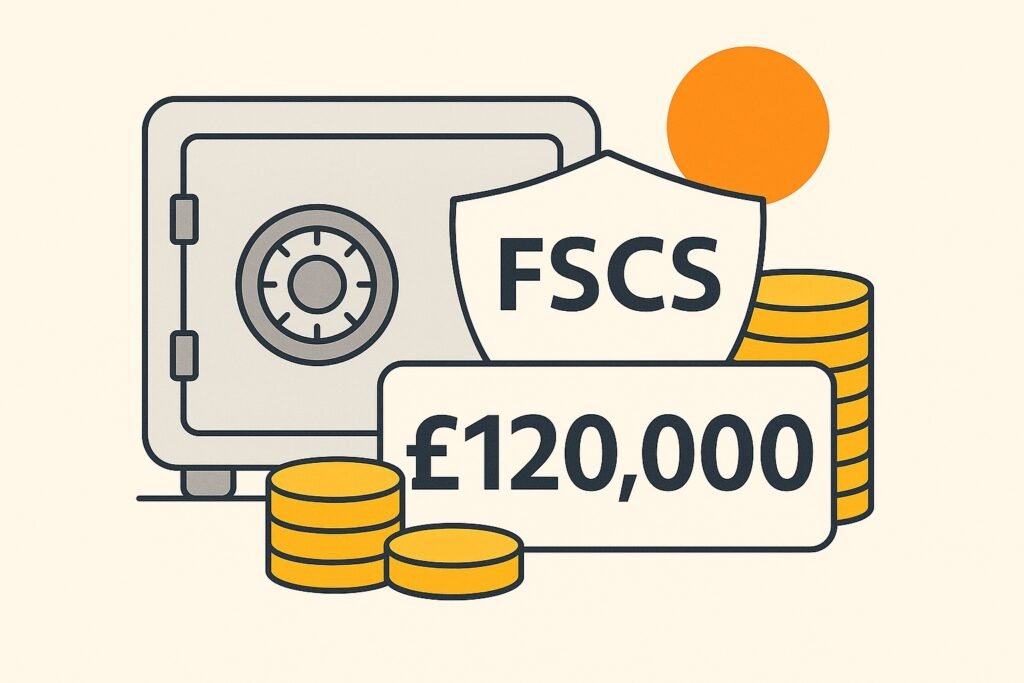
The Financial Services Compensation Scheme (FSCS) protects a proportion of customers’ funds if a bank or building society goes out of business.
If an authorised institution goes under, the FSCS will usually automatically refund eligible deposits within 7 working days, provided the bank or building society is authorised by the Prudential Regulation Authority (PRA) and regulated by the Financial Conduct Authority (FCA).
The deposit protection limit increased from £85,000 to £120,000 from 1st December 2025, the first increase since 2017.
In this guide, we examine how the FSCS protects the money in your business bank accounts.
Different protection according to your business structure
| Entity type | FSCS protection limit | Key point |
|---|---|---|
| Sole trader | £120,000 per authorised institution | Personal and business accounts are combined |
| Limited company / LLP | £120,000 per company | Separate from directors’ personal accounts |
| Partnership | £120,000 per partnership | Single claim for the partnership |
| Joint personal account | £240,000 total | £120,000 per eligible person |
Sole trader
FSCS protection limit: £120,000 per authorised institution
Key point: Personal and business accounts are combined
Limited company / LLP
FSCS protection limit: £120,000 per company
Key point: Separate from directors’ personal accounts
Partnership
FSCS protection limit: £120,000 per partnership
Key point: Single claim for the partnership
Joint personal account
FSCS protection limit: £240,000 total
Key point: £120,000 per eligible person
How are individuals protected?
The FSCS protects deposits up to £120,000 per person, per authorised institution (banking group).
If your bank or building society fails, you can claim up to £120,000 of your eligible deposits back. For joint accounts, protection is usually up to £240,000 in total.
For example, if you had £125,000 in a savings account with a single authorised institution, only £120,000 is protected. The remaining £5,000 would not be covered if the bank were unable to repay its debts.
In addition to deposit protection, FSCS protection for investment business is also up to £120,000 per person, per firm, depending on the circumstances. This limit replaced the older £50,000 cap.
The level of protection depends on the type of business you own
FSCS protection does apply to business bank accounts, subject to eligibility.
If your business account is with a UK-authorised bank or building society and the bank goes under, you can claim back up to £120,000 of your eligible deposits.

Free business account – no credit check. Ideal for sole traders.
However, the £120,000 limit applies to a single legal entity within a single authorised institution:
- Sole traders: a sole trader and their business are legally one person. If you hold a personal account and a business account at the same authorised institution, you have a single £120,000 pot across both. See also our guide to sole trader bank accounts.
- Limited companies and LLPs: a company or LLP is a separate legal entity. The company’s £120,000 protection is separate from any director’s or shareholder’s personal protection, even if accounts are with the same bank.
- Partnerships: where a joint account is held as a business partnership, the partnership is generally entitled to a single £120,000 claim rather than one per partner. Read more about joint business bank accounts for partnerships.
Example: if Jane runs a café as a sole trader and keeps £70,000 in her business account and £60,000 in personal savings with the same bank, she is covered for a total of £120,000.
If the café is incorporated as a limited company, the company’s £70,000 is protected separately from her £60,000 personal funds, giving full protection in this example.
Note: protection is per authorised institution, not per brand. Some brands share a single banking licence, so your £120,000 limit can be shared across them. Check the bank’s licence details before spreading balances.
Accounts and providers that are not covered
FSCS deposit protection only applies to money held with firms authorised to accept deposits. It does not cover:
- Accounts with firms that are not authorised to accept deposits in the UK
- Funds held with e-money institutions under safeguarding rules rather than a banking licence
- Overseas banks without UK deposit-taking authorisation
- Money held with investment or insurance companies that is not a protected deposit
Some newer business account providers operate under e-money licences rather than full banking licences.
In these cases, funds must be safeguarded in segregated accounts, but they are not protected by FSCS. Always check the provider’s regulatory status before opening an account.
See also our guide on whether you need a separate bank account as a sole trader.
Temporary high balances
Temporary high balances of up to £1.4 million (increased from £1 million from 1st December 2025) are protected for six months in certain circumstances, such as receiving the proceeds from selling a home or business, an insurance payout, a redundancy payment or an inheritance.
These claims often require additional information and can take longer than standard deposit claims.
Additional points to be aware of
- FSCS pays compensation once the authorities declare a firm in default. Standard deposit claims are usually paid within seven working days. Complex cases can take longer.
- Protection is not per account. It is per eligible person or legal entity, per authorised institution.
- If you hold significant balances, consider spreading funds across multiple authorised institutions to stay within the limits.
- You can look for the “FSCS Protected” badge or check a firm on the FCA Financial Services Register to confirm status.
If you are unsure whether your business bank account is protected by the FSCS, read the official guidance and FAQs on the FSCS website. You can also contact their helpline on 0800 678 1100.