
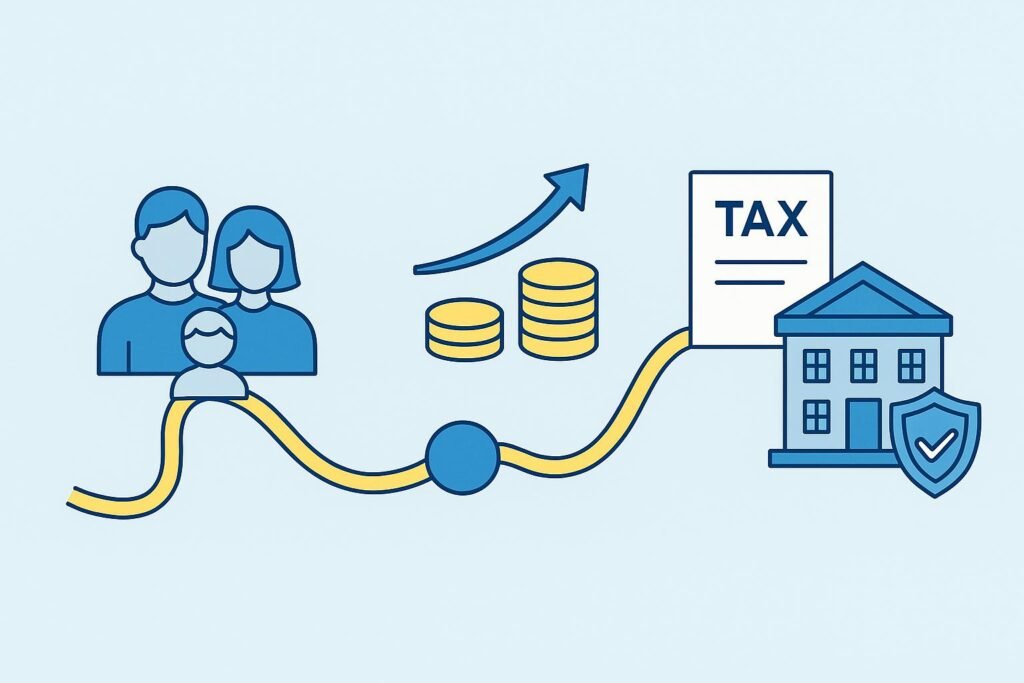
Child Benefit is still one of the most widely claimed benefits in the UK. It is not means-tested in the usual way, but there is a rule that claws it back if you or your partner earn over a set amount.
That rule is known as the High-Income Child Benefit Charge (HICBC).
It has been around since 2013, but many sole traders are still caught out every year.
Often it is because they did not realise their business profits, once everything is added up, push them over the limit.
Others forget to include it when it comes to tax return time.
The current thresholds
From 6 April 2024, the point at which the charge starts to apply moved from £50,000 to £60,000 of adjusted net income. This is not joint income; it is based on the higher earner’s income alone.
Go over £60,000 and you start paying the charge. For every £200 you are over, you repay 1% of the Child Benefit for the year. By the time you reach £80,000, the whole amount is repaid.
For example, if you received £2,000 in Child Benefit and your income is £70,000 (that is £10,000 over the lower limit), you would repay half – £1,000 through your tax return.
What counts as income
For the self-employed, HMRC looks at your adjusted net income.
You start with your taxable profits, then add items such as savings interest, dividends, rental income, or pension income.
You can take off certain reliefs, for example, Gift Aid donations and pension contributions paid from your own bank account.
It is not always obvious if you’ve gone over the threshold. A one-off gain, such as selling a rental property, can easily push you into repayment territory for that year.
How it is paid back
The charge is not taken from the Child Benefit itself. You will get the full payments during the year.
The repayment is made via Self Assessment, so you need to be registered if it applies to you.
This catches some people unawares. If you have not filed a tax return before, you will need to set up an account with HMRC and get a UTR (Unique Taxpayer Reference).
Miss the deadline and late filing penalties can apply on top of the charge itself. Our sole trader tax guide explains how your profits are taxed.
Your options
- Continue claiming and paying the charge – The money still arrives during the year, and you retain the National Insurance credits that count towards your State Pension.
- Stop the payments – You can opt out, but still register your claim to retain the NI credits.
- Plan your income – In some cases, increasing pension contributions or timing when you take income can keep you below the threshold. This needs to be thought about before the year ends.
Common mistakes
- Thinking it is based on combined household income (it is not).
- Not realising that fluctuating profits can push you over just for one year.
- Forgetting to register for Self Assessment when the charge applies.
Criticism and possible April 2026 changes
The High Income Child Benefit Charge has faced criticism since its introduction in 2013.
One of the main concerns is that it applies to individual income, not combined household income.
This means two households with the same total income can be treated differently. For example, a sole trader earning £80,000 would repay all their Child Benefit, while a couple each earning £59,000 would keep it in full.
Think tanks, professional bodies and MPs from different parties have called the charge unfair and administratively complex.
In March 2024, the government announced plans to change the way the High Income Child Benefit Charge works.
From April 2026, it is expected to be based on household income rather than the income of the highest earner. This aims to address the situation where single earners can lose all their Child Benefit while dual-income households on a similar combined income keep it in full.
HMRC also intends to introduce a system from 2025 to collect the charge automatically through PAYE tax codes for some taxpayers.
However, professional bodies such as the Low Incomes Tax Reform Group have warned that assessing the charge on a household basis could be complex to administer (LITRG).
Final tip
Even if your income means you will repay the full amount, make sure you still register for Child Benefit and then opt out of receiving the payments. This helps maintain your National Insurance credits, which in turn protect your State Pension entitlement.
For the official rules, see GOV.UK’s guide. There is also a helpful calculator here to check if you will be affected.