

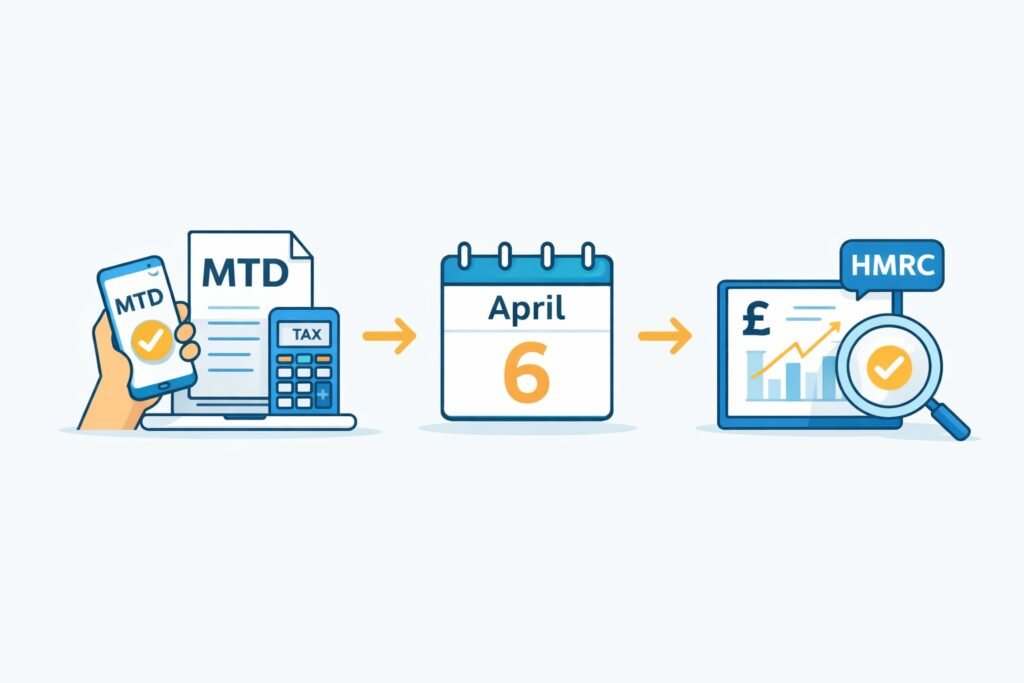
More than 200,000 businesses entering Making Tax Digital (MTD) for Income Tax this year are doing so without an accountant, and many could end up paying more if they leave it too late to seek support.
New analysis from a leading accounting software provider estimates that around 212,500 of the 850,000 businesses due to enter MTD are currently “unrepresented”, meaning they manage their tax affairs themselves.
The main concern is not dealing with MTD itself, but the timing.
According to a survey of 215 accountancy professionals by TaxCalc, capacity across the accounting sector is already tight.
Nearly half (48%) say a lack of capacity is limiting growth, and 47% say they plan to increase prices for MTD clients.
In other words, the findings suggest sole traders who wait until the last minute may face higher fees, as firms are already stretched ahead of the first MTD rollout.
25% entering MTD have no accountant
Craig Oglivie, HMRC’s Director of Making Tax Digital, has previously said around 850,000 UK businesses will enter MTD for Income Tax in the first wave.
TaxCalc’s analysis suggests roughly 25% of them, around 212,500, are unrepresented.
These are typically sole traders and landlords who have been filing their own Self Assessment returns.
Many will now need to submit quarterly updates using MTD-compatible software, rather than filing once a year.
ByteStart has covered the upcoming reporting rules in detail, including our guide to registering for MTD for Income Tax, and what the new quarterly reporting requirement means for sole traders.
Why late engagement could cost more
Andy North, Chief Customer Officer at TaxCalc, says the issue is less about compliance and more about supply and demand.
For businesses that currently pay nothing for accountancy support, bringing in an accountant late in the process could mean moving from £0 to a full annual service fee at short notice.
For firms already paying around £1,500 per year, a 10% increase would add roughly £150 annually. TaxCalc says 47% of firms surveyed expect to raise prices for MTD clients.
Scaled across more than 200,000 unrepresented businesses, the company estimates this could translate into “tens of millions” in additional accountancy costs, driven largely by late onboarding and capacity constraints rather than by the MTD legislation itself.

90% off Xero Accounting Software for 6 months + £50 Amazon voucher!
Fully compatible with Making Tax Digital (MTD) for sole traders from April 2026.
This comes at a time when many sole traders are already weighing up whether to engage an accountant at all. ByteStart recently explored the pros and cons in our guide to whether you need an accountant as a self-employed person.
HMRC will issue penalties from 2027
Although late submission penalties will not be issued during the first year of MTD, this is just a temporary reprieve.
From April 2027, missed quarterly deadlines will result in penalty points. Once a business reaches four points, a £200 fine is issued, with a further £200 charged for each subsequent missed deadline until compliance is restored.
The MTD threshold is also due to fall from £50,000 to £30,000 in April 2027, bringing a wider group of landlords and smaller sole traders within its scope.
Find out more about the rollout in our guide to when sole traders and landlords enter MTD.
“Treat April as the start”
North’s advice to businesses without an accountant is straightforward:
Start early.
He says businesses should treat April as the beginning of the new reporting regime, not the first deadline at the end of June.
Building the habit of updating records weekly or monthly will make quarterly submissions easier to deal with.
He also warns against the idea that quarterly figures can simply be estimated or filed as zeros to meet a deadline.
You are not expected to get every figure perfect, but the updates should make sense in the context of your business activity. Large gaps between quarterly submissions and the year-end return are likely to attract attention.
Put simply, MTD shifts businesses from year-end catch-up bookkeeping to keeping digital records up to date as they trade.
Software will be required either way
If you don’t hire an accountant, you can still file yourself, but you will still need to use MTD-compatible software.
Find out more about your options in our guide to MTD-compatible accounting software, as well as our broader comparison of accounting software for sole traders.
Is there a wider capacity issue?
The software provider’s survey, conducted in Autumn 2025 across 215 UK accountants, suggests that the profession as a whole is already under strain.
In fact, when the MTD threshold drops to £30,000 in 2027, the next wave in demand could be even larger.
Whatever you do – hire an accountant, or do it yourself, the advice from the profession as a whole is consistent – don’t leave things until the final quarter!